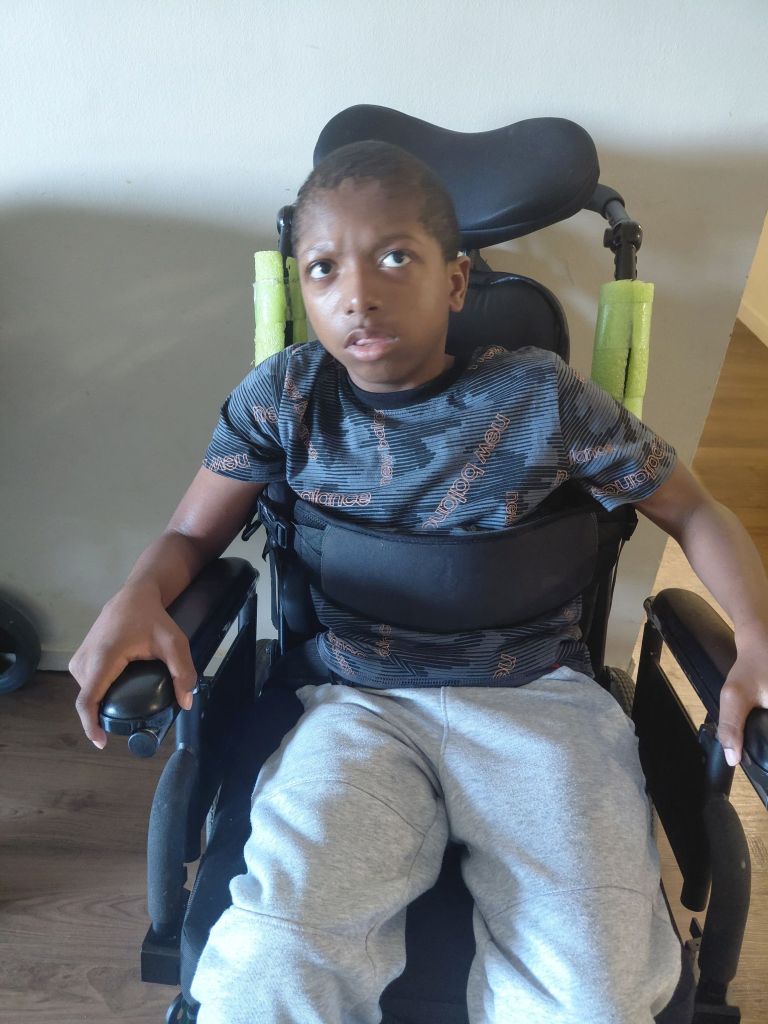
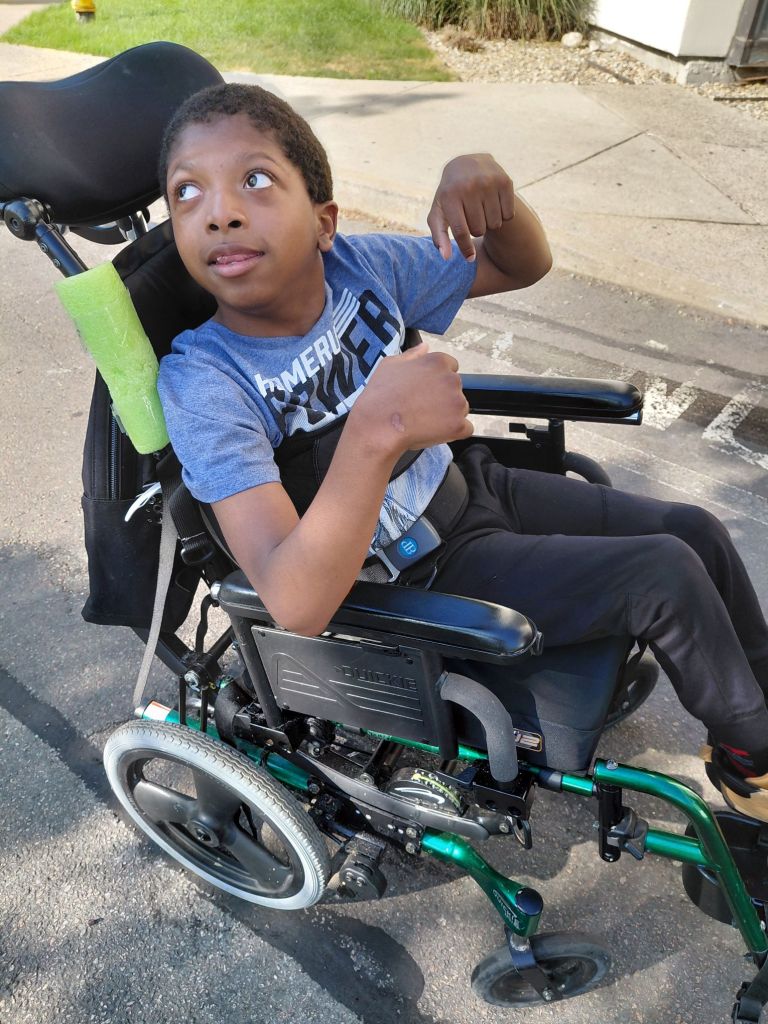
This month is a very special one for our family: it’s Aj’s birthday!
Aj’s life is a beautiful testament to the power of love, resilience, and new opportunities. His journey has been extraordinary, starting in Jamaica and bringing him to his new home here in the USA.
From Island Rhythms to American Dreams Leaving a place you call home is never easy, but Aj’s move to the U.S. has unlocked vital resources that have been life-changing. We have watched him embrace his new environment with the incredible spirit he possesses. While the transition has certainly had its challenges, seeing him settle into his new rhythm has been a constant source of joy and pride.
A Village of Support One of the most heartwarming parts of this journey has been watching Aj thrive thanks to a dedicated network of support. He is currently attending school, and his engagement and progress there have been truly inspiring.
Equally important is the complex medical care he is now receiving. Navigating the world of special needs and complex care can feel like a full-time job, but the nurses, therapists, and doctors who work with Aj are nothing short of heroes. Their expertise, dedication, and genuine warmth have allowed Aj to reach new milestones and live a fuller, more comfortable life. We are so incredibly grateful for this village of care that surrounds him every day.
The Power of Aj’s Spirit Aj’s story is about more than just medical treatments and school days—it’s about the incredible strength of his character. He teaches us every day about patience, joy, and unconditional love.
His smile can light up a room, and his determination in the face of obstacles is a constant reminder that challenges don’t define potential. He has traveled a long way, adapted to a new country and a new system of care, and he continues to inspire everyone who meets him.
Happy Birthday, Aj! So, as we celebrate Aj’s birthday this month, we aren’t just celebrating another year. We are celebrating resilience, the successful establishment of a complex care system that is helping him thrive, and the beautiful journey that brought him here.
Please join us in wishing our amazing Aj a very happy birthday! Here’s to many more years of health, happiness, and continued growth. Please read our story here https://gofund.me/b45afa65
Music can be a powerful tool for healing and relaxation, and music therapy has been shown to be particularly effective in aiding children with special needs. Music therapy involves using music to address physical, emotional, cognitive, and social needs, and is often used to treat a wide range of conditions, including autism, cerebral palsy, Down’s Syndrome, and ADHD. Here are some of the benefits that music therapy offers for children with special needs:
Improves Communication Music is a universal language that can be used to help children with special needs to communicate more effectively. Music therapy provides a non-linguistic way to build rapport and connect with children, helping them to express themselves in ways that words cannot. Music can also be used to teach language skills and improve verbal communication.
Encourages Social Interaction By participating in musical activities, children with special needs can develop social skills. Music therapy creates opportunities for group activities, where children are encouraged to work together to create and perform music. In these settings, children can develop a sense of belonging and team spirit.
Enhances Cognitive Functioning Music therapy aid in the development of cognitive abilities, such as memory, attention, and sequencing. By engaging in musical games and activities, children with special needs can improve their focus and concentration, as well as their ability to remember and follow directions.
Provides Emotional Support Children with special needs often face emotional challenges, such as anxiety, stress, and depression. Music therapy provide a soothing and comforting experience that helps children manage these emotions. Music can be used to create a calming atmosphere, or to help children express and work through their feelings in aaq safe and supportive envirnment.
Encourages Creative Expression Many children with special needs struggle to express themselves creatively. Music therapy provides a creative outlet that allows children to express themselves in a new way. By creating and performing music, children can develop a sense of pride and accomplishment, while also improving their self-esteem and confidence.
In conclusion, music therapy can be a truly transformative experience for children with special needs. Whether it’s improving communication, helping with social interaction, enhancing cognitive functioning, providing emotional support, or encouraging creative expression, music therapy offers a wide range of benefits that can help children thrive. If you have a child with special needs, you may want to consider exploring the benefits of music therapy for your child. I see where music has helped our special needs son, in a great way Check these awsome musical toys for your special needs child https://a.co/d/5wdqR2n https://a.co/d/fyN0i1m https://a.co/d/bobg8i2 Also check out this special course that i am currently doing, so that i can help more special needs parents. it is for free but you have to pay for the certificate, it is a great investement. https://alison.com/course/diploma-in-special-needs?utm_source=alison_user&utm_medium=affiliates&utm_campaign=13755998 Please check out our castor oil businesss on Instagram @exceptional_skinbeauty. Install the app to follow my photos and videos. https://www.instagram.com/invites/contact/?i=w217d5mzahk5&utm_content=m7aa1fp Thank you for supporting my blog
As a parent or caregiver of a exceptional needs child, mealtime can be a challenge. You want to provide your child with a healthy and balanced diet, but it can be difficult to determine what foods they will enjoy and what foods they may have difficulty eating.
One way to make mealtime more fun for your special needs child is to create a menu that includes a variety of colorful and flavorful foods that are easy to eat and fun to look at. Here are some tips for creating a fun menu for exceptional needs children:
1. Use bright and colorful foods
Foods that are bright and colorful can be more appealing to children with special needs. Try using a variety of fruits and vegetables in different colors, such as red strawberries, orange carrots, yellow bell peppers, green broccoli, and purple grapes.
2. Offer finger foods
Finger foods are easy for children to eat and can be a fun way to encourage them to try new foods. Try offering bite-sized pieces of fruits, vegetables, cheese, or crackers.
3. Use fun shapes and designs
Use cookie cutters to create fun shapes out of fruits and vegetables. You can also use food molds to create fun designs with rice, mashed potatoes, or other foods.
4. Offer foods with different textures
Some special needs children may have difficulty with certain textures. Offer a variety of foods with different textures, such as crunchy vegetables, smooth yogurt, and chewy fruit snacks.
5. Make it interactive
Involve your child in mealtime by letting them help prepare the food or by offering foods that they can assemble themselves, such as a make-your-own sandwich or taco bar.
Some fun menu ideas for special needs children include:
– Rainbow fruit salad: Use a variety of colorful fruits, such as strawberries, oranges, bananas, kiwi, blueberries, and grapes, to create a fun and healthy fruit salad.
– Ants on a log: Cut celery sticks into bite-sized pieces and fill them with peanut butter or cream cheese. Top with raisins to create “ants on a log.”
– Mini pizzas: Use English muffins or small pizza crusts as the base and let your child choose their own toppings, such as cheese, pepperoni, vegetables, or ham.
– Smoothie bowls: Blend together a variety of fruits and yogurt to create a delicious and nutritious smoothie. Serve in a bowl and top with granola, nuts, or more fruit.
– Veggie sushi rolls: Use sushi rice and nori sheets to create fun and colorful sushi rolls. Fill with avocado, cucumber, carrots, and other vegetables.
Creating a fun menu for exceptional needs children can be a great way to encourage them to try new foods and make mealtime more enjoyable for everyone. With a little creativity and some colorful ingredients, you can create a menu that your child will love. Thank you for reading this article, please follow me on YouTube where I post video on the benefits of castor and also display castor oil that we have made https://youtu.be/zTiNPpInWW4 Also check out these cool toys on Amazon for your exceptional little ones https://a.co/d/8wi4Zcg https://a.co/d/5wdqR2n https://a.co/d/7NKPhch https://a.co/d/2SdfrTc https://a.co/d/8ZWUtKt
Happy new year exceptional creative parents! I am so excited that we are in a new year, as you embark on this beautiful journey to take care of your exceptional little one, I pray that God will give you the strength as you advocate, take your child to therapies, play, daycare and be the voice for your child. I hope that you know how valuable and special you are as parents. You are doing an amazing job! Keep pushing. I know that last year you have faced some setbacks, I know that your special little have face some challenges too, but God has carried you through, I know that there are nights and days that you have cried and asked a lot of questions. Please don’t give up, you are not alone, you are special in every way, your child is a gift, blessing and a miracle. As your child continues to improve with the help of God, therapies, your hard work and sacrifices rest assure that this is a beautiful milestone. Congratulations! Remember that you are no alone! as we will be victorious this year! I look forward to be on this momentum journey with you. For daily inspirations and encouragement follow me at https://youtu.be/9kqwR77Y3ns, also check out this earning site https://money-easilyojy.buzz/77810282252410. Thanks for your support 🥰
Don’t try to convince your child that someone with a disability is just like they are. Instead, acknowledge that they are a little different, but make it clear that just because someone is different, that doesn’t make that person bad.1
Then, show your child how to talk about those differences in a respectful manner. Give your child the language to use to talk about someone who has a learning disability or a physical disability.
Educate your child about disabilities in a matter-of-fact manner. Say things like, “The muscles in your uncle’s legs don’t work like yours. That’s why they have trouble walking,” or “They were born with one leg. So they have a prosthetic leg that doctors made for them that they use to walk.”
Try to keep your emotions out of your conversation. If you say someone’s disability is “sad” or “awful,” your child may pity the person, and that won’t be helpful.
Here are some important points to make:
Some people are born with disabilities. Make it clear that sometimes, babies are born with disabilities. But at other times, people develop disabilities later in life.
People with disabilities aren’t sick. Explain that a child with cerebral palsy or muscular dystrophy isn’t sick. You don’t want your child to think they might catch a disability.
There’s nothing wrong with people with disabilities. Your child may ask questions like, “What’s wrong with that girl?” Explain that a child may have trouble talking or difficulty walking but that doesn’t mean there’s something “wrong” with them.
A physical disability doesn’t mean someone has a cognitive disability. Sometimes, kids assume someone with a physical disability may also struggle to communicate or may not be smart. Make it clear that just because someone’s body doesn’t work the same doesn’t mean their brain is impaired.
Explain Adaptive Equipment
Talk to your child about how people with disabilities may use adaptive equipment to assist them. A classmate may have a hearing aid, for example; other people walk with crutches or use a wheelchair to get around.
You may also explain why there are parking spaces for people with physical disabilities located near the store. Explain how someone may use a special vehicle designed to fit a wheelchair with a ramp or lift.
Educate your child how to best assist someone who uses adaptive equipment. For example, make it clear that your child should never pet a dog who is wearing a service animal vest unless the owner invites him to do so, and explain how holding a door for someone who uses a wheelchair may make it easier for them.
Point Out Similarities
Make sure you don’t send the message that people with disabilities are completely different from everyone else. Point out things a child with a disability has in common with your child. Say things like, “Lucy is good at math, just like you are. And you both love to listen to the same kind of music.”
Understanding how they’re the same can help your child relate better to people with disabilities, and it can help increase your child’s empathy.
Learn About Disabilities Together
There’s a good chance you won’t have all the answers about someone’s disability. Researching a disability together can help you show your child how to educate himself on unfamiliar conditions.
Look for kid-friendly websites that offer information about autism, Down syndrome, learning disabilities, or other disabilities that your child may have questions about. Then, go through the information together.
Read age-appropriate books about disabilities too, and look for TV shows that address specific conditions. Sesame Street, for example, has a Muppet character named Julia who has autism.
Teach Kindness and Sensitivity
Unfortunately, there’s a good chance your child will overhear some unkind words used to describe someone’s disability, and there’s a chance your child will repeat them. Address these remarks right away. Explain to your child that such words are hurtful and it’s not OK to say them.
If your child continues to use those words after you’ve explained to them that they’re inappropriate, give a negative consequence. Make it clear that putting people down and speaking disrespectfully about others won’t be tolerated.
Additionally, don’t allow your child to engage in mean-spirited behaviour. Make it known that imitating people with a disability isn’t kind and tell your child not to laugh at others.
Make sure you’re a good role model. If you use outdated language or inappropriate words to describe people with disabilities, your child will follow suit.
Tell Your Child to Ask Before Helping
Kids often want to be helpers, but they may not know how to do something that is actually helpful. Or, they may put themselves in danger.
Getting behind someone in a wheelchair without asking them if they need assistance could be dangerous if the person using the wheelchair doesn’t see your child. Similarly, your child may be tempted to intervene if they see a child with autism who is feeling very upset. But, the child just may need a little space to calm down and giving them a hug could make it worse.
So teach your child to ask before springing into action. Asking, “Is there anything I can do to help?” gives the other person an opportunity to say whether assistance would be appreciated.
How to Talk About a Loved One Who Has a Disability
If your child grows up with a loved one who has a disability—like a cousin or a grandparent—they may raise new questions over time. As they gain a better understanding of the body, they may have bigger questions.
If it’s a close friend or family member who has the disability, ask if the individual is willing to answer your child’s questions. You may find your loved one is happy to field questions to give your child a better understanding.
How to Talk About a Peer Who Has a Disability
Your child may have questions about a peer at school that you’re not able to answer. You may have no idea why one classmate requires help to eat their lunch or why another doesn’t speak in full sentences. You may want to explain, “I’m not sure why they need help eating. Maybe the muscles in their arms don’t work like yours do.”
You may also want to contact your child’s teacher. While the teacher can’t reveal information to you about another student, it might be helpful for the teacher to know your child has questions, and other children likely have questions too.
Many schools offer disability-awareness programs. Find out if your child’s school has any type of curriculum that teaches kids about disabilities. When children understand another child’s disability, they’re more likely to become an ally.
Encourage your child to include peers with disabilities in activities. Eating lunch at the same table, playing at recess, or simply striking up a conversation are a few ways your child can be inclusive.
If your child wants to invite a child with a disability to a birthday party, you may want to call the other parent to talk about how to make it happen. Say, “My son wants to have a party and he’d love to have your child attend. Is there anything we need to know to make it safe and fun for them?”
If you have a disability, your child may have a lot of questions about whether you’re going to get better or why you can’t do certain things. It’s important to give honest answers in a kid-friendly manner.
It can be confusing for kids if a parent has a disability that isn’t visible on the outside. Kids can’t see what’s wrong when a parent has an issue that involves chronic pain, for example, so it’s important to give kids a little information about the science behind what’s happening to your body.
It can also be helpful to share about your self-care strategies. Whether you attend physical therapy, get acupuncture, or take medication, make it clear to your child that you are taking steps to take care of yourself.
If you have a new disability—like the loss of a limb from an accident—and your child is struggling to adjust, seek professional help. Talking to a therapist could help your child process their feelings and adjust to the changes. Please check out this earning App thanks https://refer.tapestri.io/c/72730




 Our Journey